
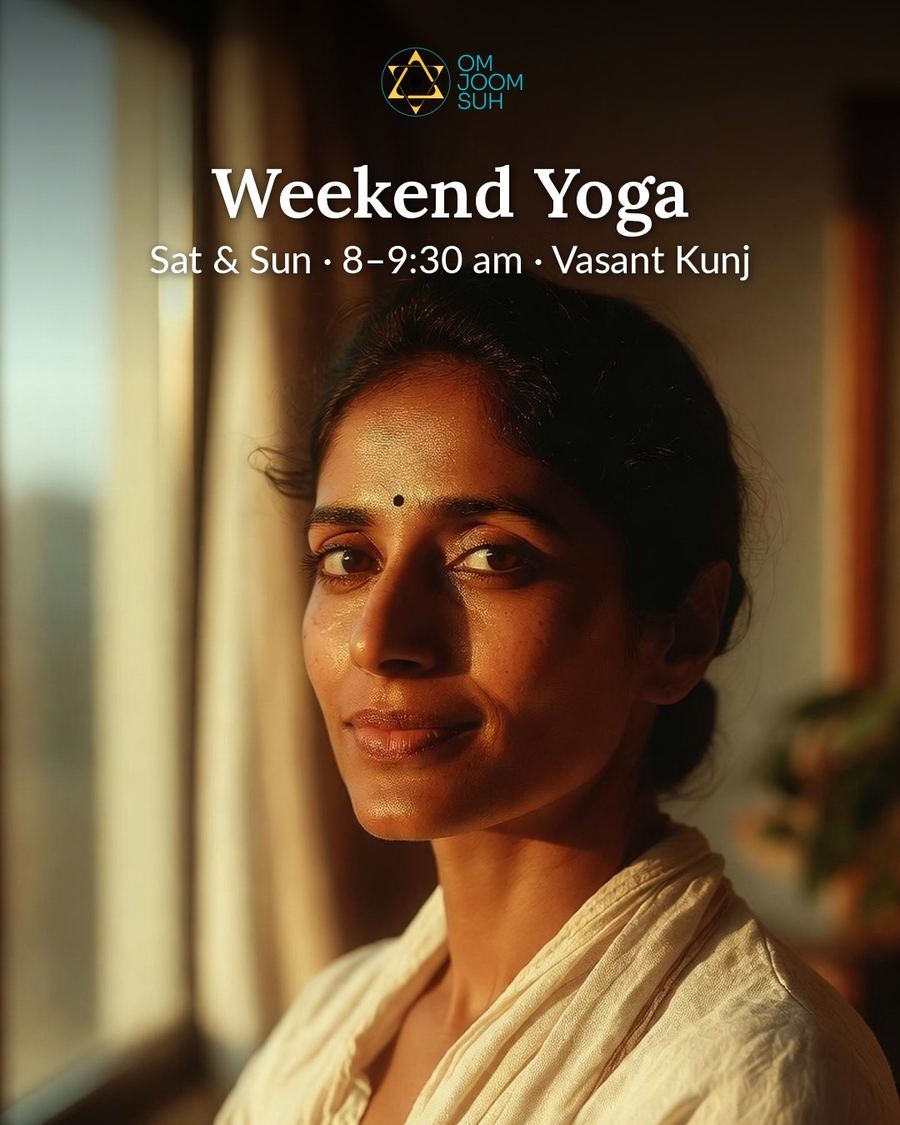
Nine stages.
One practice.
A course, taught in order.
What this is.
Most yoga is a room, a mat and ninety minutes. You arrive, you stretch, you leave. Next week you start again from nothing.
This is different. It is a syllabus, taught in nine stages, in the order the body can take it. Each stage builds on the one before.
The stages are not months. You move on when you are ready. And it does not finish at the ninth. That is where your own daily practice begins.
You do not need to be flexible. You do not need to have done yoga before.
The nine stages.
Tap any stage to see what is taught in it.
The Ground
Stages 1 – 3You learn to sit, to breathe, and to relax. Nothing here is strenuous. Most of it will be new.
Stage 1 Sitting and breathing.
What you learn
- How to sit for practice, and why it comes first
- Loosening the joints · neck, shoulders, hips, knees
- Full breathing, low into the belly
- Complete relaxation, lying down
- The rules of practice: when, where, on what stomach
What changes
You sleep better. You notice your own breath for the first time.
Stage 2 The first postures.
What you learn
- How to enter a posture, hold it, and leave it
- The seated postures used for breathing and meditation
- Surya Namaskara, built up step by step
- Alternate nostril breathing, first stage
- Watching the body from the inside
What changes
Stiffness eases. You feel tension before it becomes pain.
Stage 3 Digestion and diet.
What you learn
- What yoga is, and how the parts fit together
- Agnisar, for the digestive fire
- Ujjayi, the throat breath
- What to eat, when to eat, and why
- Sitting still without moving
What changes
Digestion settles. Meals stop feeling heavy.
Turning Inward
Stages 4 – 6The body now knows what to do, so attention moves inside. This is where the mind is first steadied.
Stage 4 Steadying the mind.
What you learn
- What the mind is doing, and why it will not sit still
- Hand positions that hold attention
- Alternate nostril breathing, second and third stages
- Trataka · gazing at a flame
What changes
You can hold attention for ten minutes.
Stage 5 Concentration.
What you learn
- Why the mind gets stuck, and how it loosens
- The eye practices that quiet thought
- Trataka, deeper
- Longer pranayama, with count
What changes
Moods pass faster. The morning starts clear.
Stage 6 Sound and action.
What you learn
- Aum chanting, and what it does to the nerves
- Work without strain · karma yoga, in practice
- Watching the space behind closed eyes
- Alternate nostril breathing, fourth stage
What changes
The practice stays with you through the day.
Going Deeper
Stages 7 – 9The practices the tradition keeps for later. Taught plainly, to a body that has been prepared for them.
Stage 7 The locks, and going upside down.
What you learn
- Jalandhara bandha · the throat lock
- Sarvangasana · the shoulder stand, taught safely
- Stronger postures, held longer
- Pranayama with ratio
What changes
You are steady in postures that once looked impossible.
Stage 8 Mantra with the breath.
What you learn
- Ajapa japa, first stages · the mantra that rides the breath
- Uddiyana bandha
- Moola bandha
- Practices for visualisation
What changes
The practice runs on its own. You stop having to start it.
Stage 9 A practice of your own.
What you learn
- Ajapa japa, later stages
- Sirshasana, in careful stages, if your body allows
- Balancing the two sides of the breath
- Self-acceptance, and what health actually means
- Putting together your own daily practice
What changes
You leave with a full daily practice, and you keep it for life.
The deeper practices, taught plainly.
Mudra, bandha, ajapa japa. These sound difficult, or secret. They are neither. They are only later. Taught in order, to a body that has been prepared, they are as ordinary to learn as breathing was in Stage 1. Nothing is withheld. Nothing is given before you can hold it.
Cleansing practices are separate.
Jala neti and shankhaprakshalana need a washroom and close supervision. They are taught one to one, by appointment, and charged separately from the weekend practice. They are not part of any stage.
What is asked of you.
- Two mornings a week. Ninety minutes each.
- Arrive on time, on an empty stomach, in clothes you can move in.
- A little practice at home between weekends. Short, and shown to you.
- Patience. That is the only real condition.
Come this Saturday.
Sit in one morning before you decide anything. That is the whole first step.
Message on WhatsApp